
Dryer Moisture Sensor Failure: Why Your Clothes Stay Damp & What You Can Do
If your dryer leaves clothes damp or stops before the load is completely dry, a dirty or faulty moisture sensor may be the cause. This sensor detects the moisture level in your clothes and helps the dryer end the cycle at the right time. When it fails, drying performance becomes inconsistent and energy usage may increase.
At KZ Express Appliance Repair, we diagnose and repair dryer moisture sensor problems for homeowners in Baltimore, Dundalk, Towson, White Marsh, Essex, Pasadena, Catonsville, and nearby Maryland communities.
Some moisture sensor problems are easy to fix, but recurring drying issues are often a sign that your dryer needs professional dryer repair to prevent further damage.
This guide explains the most common causes, what you can safely check yourself, and when it’s time to call a professional.
Quick Information
Difficulty: Moderate
Estimated Check Time: 10–15 Minutes
Tools Needed: Soft cloth, rubbing alcohol, flashlight, screwdriver (if inspection is needed)
Safety: Always unplug the dryer before inspecting internal components or removing any panels. Never work on a dryer that is connected to power.
How Does a Dryer Moisture Sensor Work?
A dryer moisture sensor is typically located inside the drum, near the lint filter housing. It consists of two metal sensor bars that detect the amount of moisture remaining in your clothes during an automatic drying cycle.
- As damp clothes touch the sensor bars, a small electrical signal is created and sent to the dryer’s control board
- The dryer uses this information to determine whether the load is still wet or completely dry
- Once the sensor detects that the clothes have reached the selected dryness level, the dryer automatically ends the cycle
- If the sensor becomes dirty, damaged, or stops working properly, the dryer may shut off too early, run longer than necessary, or leave clothes damp.
Signs of a Dryer Moisture Sensor Failure
A failing moisture sensor doesn’t always stop the dryer from working completely. More often, it causes inconsistent drying performance that becomes worse over time.
Common signs include:
- Clothes remain damp even after an Auto Dry cycle.
- The dryer stops after only a few minutes.
- Drying times seem different with every load.
- Heavy items like towels stay wet while lighter clothes are dry.
- The dryer keeps running much longer than necessary.
- Auto Dry cycles no longer work correctly, but Timed Dry cycles still perform normally.
- You have to restart the dryer multiple times to finish drying one load.
These symptoms don’t always mean the sensor itself has failed. Lint buildup, fabric softener residue, wiring problems, or even a faulty control board can produce similar behavior. That’s why a proper inspection is important before replacing parts.
What Causes a Dryer Moisture Sensor to Fail?
The moisture sensor is designed to detect electrical conductivity created by damp clothing as it passes across the metal sensor bars. Over time, several issues can prevent it from reading moisture accurately.
Fabric Softener Residue
One of the most common causes is invisible residue left behind by dryer sheets and liquid fabric softener. This thin coating acts as an insulator, preventing the sensor from detecting moisture correctly.
Dirty Sensor Bars
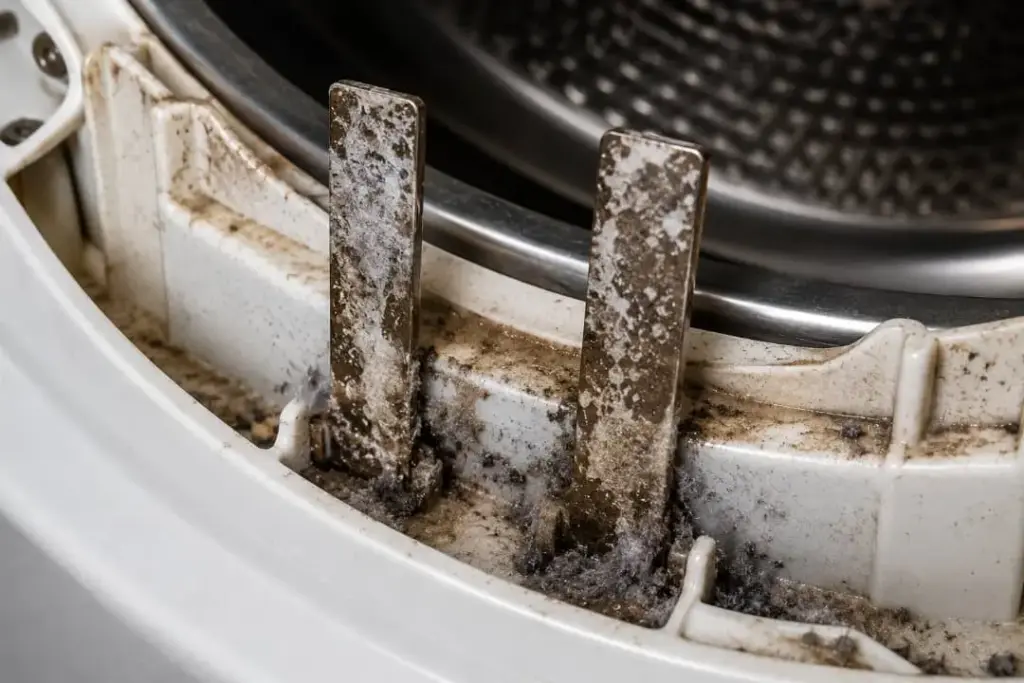
Lint, detergent residue, and everyday dust can build up on the sensor over months of use. Even a small amount of buildup may reduce its accuracy and cause the dryer to end cycles too soon.
Damaged Wiring
The sensor relies on a small wiring harness to communicate with the electronic control board. Loose connectors, corrosion, or damaged wires can interrupt that signal and create false readings.
Failed Moisture Sensor
Although less common than dirt buildup, the sensor itself can eventually wear out after years of regular use. Internal failure may cause inconsistent readings or prevent the dryer from detecting moisture altogether.
Electronic Control Board Problems
In some cases, the moisture sensor is working properly, but the main control board can no longer process the signal correctly. This is less common but should be considered if other components test good.
Dirty Dryer Moisture Sensor Bars
What Can You Fix Yourself?
Before scheduling a repair, there are a few simple checks you can safely perform.
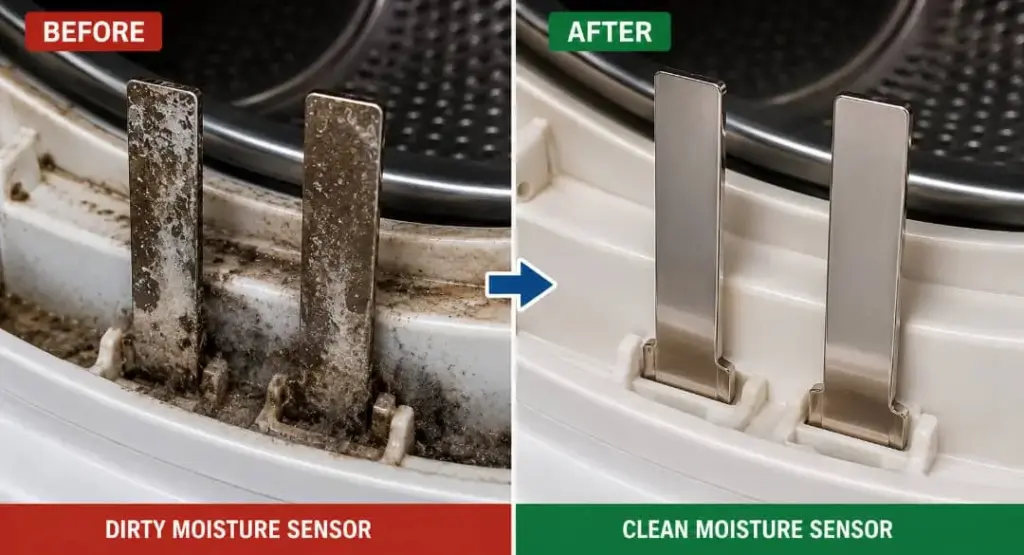
- Cleaning the moisture sensor bars with a soft cloth and rubbing alcohol to remove any fabric softener residue.
- Clean the lint filter and inspect the vent hose for restrictions, as poor airflow can mimic the symptoms of a faulty sensor.
- Running a test load using the Timed Dry cycle can also help determine whether the problem is related to the moisture sensor or another dryer component.
If these steps don’t improve drying performance, the issue may involve the sensor itself, damaged wiring, or the electronic control board. In that case, it’s best to have the dryer professionally diagnosed. Learn more about our appliance repair services, or you can also explore our appliance repair tips for more troubleshooting guides covering common appliance problems.
Before / After Cleaning the Moisture Sensor
Safety Tip
- Always unplug your dryer before cleaning the moisture sensor or inspecting any internal components.
- Never attempt electrical testing or remove access panels unless you have the proper tools and experience. A few minutes spent working safely can prevent electrical shock and avoid accidental damage to your appliance.
- For additional dryer safety recommendations, refer to the U.S. Consumer Product Safety Commission.
When Should You Stop and Call a Technician?
Stop troubleshooting if:
- Cleaning the sensor doesn’t solve the problem.
- The dryer repeatedly ends cycles too early.
- The same symptoms return after every load.
Burned wiring, visible damage, unusual error codes, or signs of a failed control board should also be inspected by a qualified technician.
Need expert help?
What Happens If You Ignore a Faulty Moisture Sensor?
Ignoring a faulty dryer moisture sensor can lead to several problems over time, including:
- Longer drying times, which increase energy consumption. The ENERGY STAR dryer maintenance recommendations also emphasize proper dryer maintenance to improve efficiency and reduce energy use.
- Higher utility bills due to repeated or extended drying cycles.
- Clothes that remain damp or become overdried, causing unnecessary fabric wear.
- Extra stress on the heating element and other dryer components, potentially leading to more expensive repairs.
- Reduced dryer efficiency, making every load take longer than it should.
If your dryer continues to leave clothes damp or behaves inconsistently after basic cleaning, don’t let the problem get worse.
How KZ Express Diagnoses & Repairs Dryer Moisture Sensor Problems
At KZ Express Appliance Repair, we follow a step-by-step diagnostic process to ensure the correct repair:
- Inspect the moisture sensor bars for dirt, fabric softener residue, or corrosion.
- Clean the sensor and retest the dryer before recommending any replacement.
- Check the wiring harness and electrical connections for loose, damaged, or corroded wires.
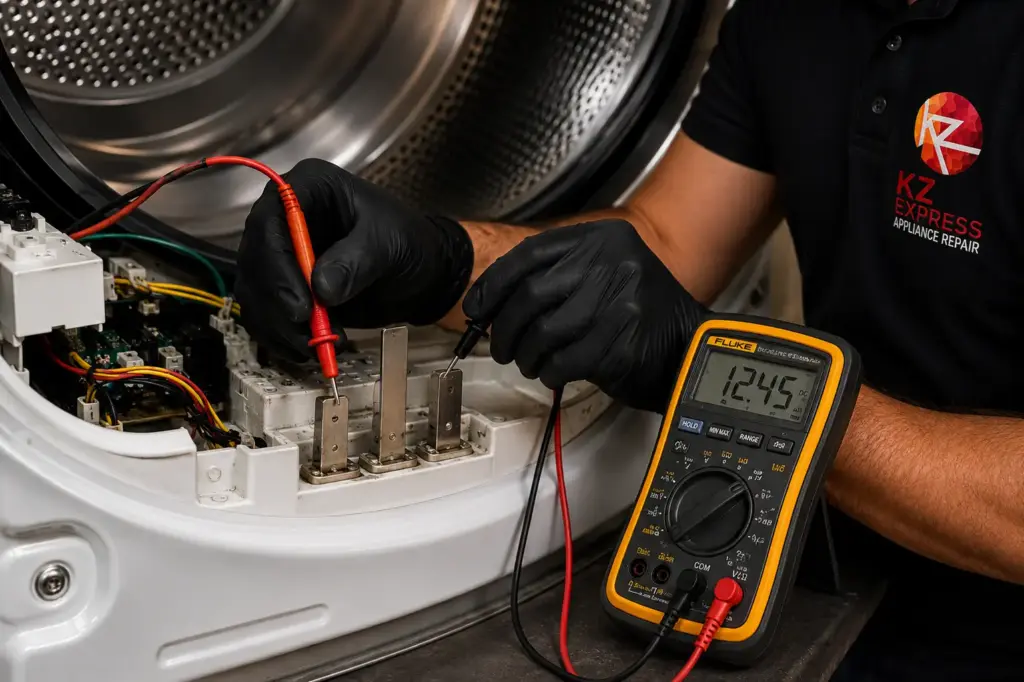
- Test the moisture sensor circuit to verify it is sending accurate readings.
- Inspect airflow by checking the lint filter and dryer vent for restrictions that can mimic sensor failure.
- Evaluate the electronic control board if the sensor tests correctly but drying problems continue.
- Replace only the failed component when necessary—never parts that are still functioning properly.
- Perform a final drying cycle test to confirm the dryer is operating normally before completing the repair.
Professional Dryer Moisture Sensor Testing
| Symptom | Possible Cause | DIY | Call a Technician |
|---|---|---|---|
| Clothes stay damp after Auto Dry | Dirty moisture sensor | ✅ Clean the sensor bars | If the problem continues |
| Dryer stops too early | Faulty moisture sensor | ❌ | ✅ Yes |
| Dryer runs longer than expected | Blocked vent or dirty sensor | ✅ Check and clean the vent | If airflow is normal but the issue remains |
| Auto Dry doesn’t work, but Timed Dry does | Moisture sensor or control board issue | ❌ | ✅ Yes |
| Inconsistent drying results | Sensor contamination or damaged wiring | Clean the sensor | A technician should inspect wiring and electronic components |
| Dryer displays moisture sensor-related errors | Failed sensor or control board | ❌ | ✅ Professional diagnosis recommended |
Frequently Asked Questions
How Can I Tell If My Dryer Moisture Sensor Is Bad?
Common signs of a faulty moisture sensor include clothes remaining damp after an Auto Dry cycle, the dryer stopping too early, inconsistent drying times, or Auto Dry not working while Timed Dry operates normally. Before replacing the sensor, clean the sensor bars and check for restricted airflow, as these issues can produce similar symptoms.
What Does “Sensor Dry” or “Sense Dry” Mean?
Sensor Dry (sometimes labeled Sense Dry) is an automatic drying program that uses the dryer’s moisture sensor to monitor the remaining moisture in your clothes. Instead of running for a fixed amount of time, the dryer adjusts the cycle based on how quickly the load dries, helping reduce energy consumption and prevent over-drying.
Why Is There Moisture in My Dryer?
A small amount of moisture inside the dryer is normal because wet clothes release water during the drying cycle. However, excessive moisture or condensation may indicate a clogged vent, poor ventilation, restricted airflow, or, in some cases, a moisture sensor that is not working correctly.
Can I Clean a Dryer Moisture Sensor Instead of Replacing It?
Yes. In many cases, cleaning the moisture sensor with a soft cloth and rubbing alcohol removes fabric softener residue that prevents accurate moisture detection. If cleaning does not improve drying performance, the sensor or another component may require professional testing.
Do All Electric Dryers Have a Sensor Dry Cycle?
No. Many modern electric dryers include a Sensor Dry feature, but some older or basic models only offer Timed Dry cycles. If your dryer has a Sensor Dry option and it no longer works correctly, the moisture sensor, airflow, or electronic controls may need to be inspected.
If you’re experiencing persistent dryer problems in Baltimore, Dundalk, Towson, White Marsh, Essex, Pasadena, Catonsville, or nearby Maryland communities, KZ Express Appliance Repair is here to help. Call and schedule a professional dryer inspection and get your appliance back to drying efficiently.
